How to Diversify with Alternative Assets Like REITs and INVITs
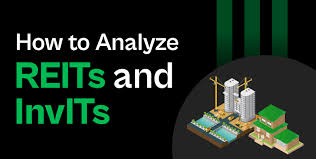

Learn how to diversify your investments with REITs and INVITs. Understand what these alternative assets are, how they work, their benefits, risks, and best options in India for 2025.
The New Face of Smart Investing
For years, Indian investors have relied on stocks, FDs, gold, and mutual funds for growing their wealth. But now, the landscape is changing.
A new breed of investments — REITs (Real Estate Investment Trusts) and INVITs (Infrastructure Investment Trusts) — are offering investors a chance to diversify portfolios, earn steady income, and participate in real estate and infrastructure growth without owning a single property or asset physically.
If these terms sound too technical, don’t worry. By the end of this article, you’ll understand exactly what REITs and INVITs are, how they work, their pros and cons, and how to use them to diversify your investments smartly in 2025 and beyond.
1. What Are Alternative Assets?
Before we jump into REITs and INVITs, let’s understand what alternative assets mean.
Traditional assets include:
- Stocks (Equity)
- Bonds (Debt)
- Fixed Deposits
- Gold or Cash
Alternative assets, on the other hand, include:
- Real estate (commercial or residential)
- Private equity
- Commodities
- Infrastructure
- REITs and INVITs
In simple words, alternative assets are those that don’t move exactly like the stock market. They help balance your portfolio when markets fluctuate — reducing risk and increasing long-term stability.
2. What Are REITs (Real Estate Investment Trusts)?
Think of a REIT as a mutual fund for real estate.
Instead of buying a flat or office, you buy units of a REIT, which owns and manages multiple income-generating properties such as:
- Office spaces
- Shopping malls
- Warehouses
- Hotels
The rental income collected from tenants is distributed among investors as dividends or income payouts.
Example:
Let’s say you invest ₹50,000 in a REIT. That REIT might own several office buildings leased to big companies like Infosys, Wipro, or Amazon. Every quarter, you receive a share of the rent as income.
So, you become a part-owner of a real estate empire — without buying or maintaining property yourself.
How REITs Work:
- REITs pool money from many investors.
- They buy, manage, or lease real estate assets.
- At least 80% of the portfolio must be invested in income-generating real estate.
- They must distribute at least 90% of income as dividends to investors.
Popular REITs in India (as of 2025):
- Embassy Office Parks REIT
- Mindspace Business Parks REIT
- Brookfield India REIT
- Nexus Select Trust REIT
All are listed on Indian stock exchanges (NSE/BSE) and can be bought/sold like regular stocks.
3. What Are INVITs (Infrastructure Investment Trusts)?
While REITs invest in commercial real estate, INVITs focus on infrastructure assets such as:
- Highways
- Power transmission lines
- Telecom towers
- Gas pipelines
They work similarly — pooling investor funds to own and operate large-scale infrastructure projects.
INVITs earn stable cash flows through tolls, tariffs, or usage charges, and distribute them to investors as dividends.
Example:
If you invest in an INVIT that owns highways, part of the toll collected from vehicles is shared with you.
Popular INVITs in India:
- IRB Infrastructure Trust
- IndiGrid Trust (Power sector)
- PowerGrid INVIT
- Digital Fibre Infrastructure Trust (Telecom)
INVITs allow everyday investors to benefit from India’s booming infrastructure growth without spending crores on physical assets.
4. REITs vs. INVITs — Quick Comparison
| Feature | REITs | INVITs |
| Underlying Asset | Real estate (offices, malls, hotels) | Infrastructure (roads, power, telecom) |
| Income Source | Rent from properties | Tolls, tariffs, user charges |
| Risk Level | Moderate | Moderate |
| Return Type | Dividend + capital appreciation | Dividend + cash flow yield |
| Volatility | Moderate (market-linked) | Moderate (project performance-based) |
| Liquidity | Listed on exchanges | Listed (but lower volume) |
| Ideal For | Income + long-term growth | Stable income + diversification |
Both offer steady income, portfolio diversification, and exposure to India’s growth story — but with slightly different focuses.
5. Why Should You Invest in REITs and INVITs?
Let’s break down the main benefits in simple language:
✅ a. Regular Income
These trusts distribute most of their earnings — often quarterly payouts — offering a steady passive income stream.
✅ b. Diversification
They add a new layer to your portfolio beyond equities and debt.
When stock markets are volatile, real estate and infrastructure returns often remain stable, reducing your overall risk.
✅ c. Low Entry Cost
Instead of investing ₹50 lakh in a flat or office, you can invest in a REIT or INVIT with as little as ₹500–₹1,000 through the stock exchange.
✅ d. Liquidity
Unlike physical property, REITs and INVITs are listed and tradable — you can sell your units anytime in the market.
✅ e. Transparency
They are regulated by SEBI, with regular disclosures and mandatory income distribution. You can easily check their financials online.
✅ f. Hedge Against Inflation
Since rent and usage charges tend to rise over time, REITs and INVITs act as inflation-protected assets.
6. Risks Involved
While they’re safer than direct property investments, REITs and INVITs do carry certain risks:
❌ a. Market Volatility
Listed prices fluctuate like stocks. So, if markets fall, REIT or INVIT values can drop temporarily.
❌ b. Interest Rate Impact
If interest rates rise, investors may shift to safer debt instruments, lowering REIT/INVIT prices.
❌ c. Occupancy Risk
If office spaces or roads see lower usage, income distribution may reduce.
❌ d. Limited Growth
Unlike equities, these instruments focus on income, not rapid capital appreciation.
Still, their risk-return balance is ideal for moderate investors who seek steady, predictable income.
7. Returns from REITs and INVITs in India
On average, Indian REITs have delivered 8–12% annual returns, combining dividend payouts and price appreciation.
INVITs have provided 7–10% steady yields, depending on the asset performance.
That’s higher than fixed deposits and closer to mutual fund returns, but with much lower volatility.
Example Return Comparison (5 years)
| Investment Type | Average Annual Return | Liquidity | Risk |
| Bank FD | 6–7% | High | Low |
| REITs | 9–12% | High | Moderate |
| INVITs | 8–10% | Moderate | Moderate |
| Equity Mutual Funds | 12–15% | High | High |
Thus, REITs and INVITs fit beautifully in the “middle zone” — between safe FDs and high-risk equity funds.
8. How to Invest in REITs and INVITs
It’s as easy as buying a stock!
Step-by-Step:
- Open a Demat + Trading Account.
You can invest through Zerodha, Groww, Upstox, or any broker. - Search the REIT/INVIT name.
Example: Embassy REIT or PowerGrid INVIT. - Buy Units.
Minimum investment can be as low as ₹500–₹1,000. - Track Performance.
Monitor occupancy, income distribution, and price trends quarterly.
👉 You can also invest through mutual fund schemes that include REITs or INVITs for indirect exposure.
9. How REITs and INVITs Help Diversify Your Portfolio
A well-balanced portfolio might look like this:
| Asset Class | Allocation |
| Equity (stocks, mutual funds) | 50% |
| Debt (FD, bonds) | 25% |
| REITs & INVITs | 15% |
| Gold or Others | 10% |
By adding REITs and INVITs, you spread your risk across different income sources — market returns, rent, tolls, and asset usage — ensuring stability even during market downturns.
10. Final Thoughts: The Future of Alternative Assets in India
India is entering a massive infrastructure and commercial real estate boom.
- Smart cities are expanding.
- Office demand is returning post-pandemic.
- Highways, power grids, and telecom infrastructure are rapidly growing.
All this means steady long-term income streams for REIT and INVIT investors.
So, if your portfolio currently includes only stocks and mutual funds, it’s time to add alternative assets like REITs and INVITs for true diversification.
They combine the income stability of FDs, growth potential of equities, and real asset backing — all in one package.
✅ In short:
“REITs and INVITs bring the power of big assets into small investors’ hands — safely, transparently, and profitably.”
Start your journey into alternative assets today. Explore REITs and INVITs to make your portfolio future-ready and balanced for 2025.
For More Such Amazing Content Please Visit : https://investrupeya.insightsphere.in/










Post Comment