Tax-Related Aspects People Miss Out on Their Salary Slips — A Complete Guide for Salaried Employees

Salary slips look simple on the surface, but they hold critical tax-related components that most employees never notice. Missing these small details often leads to higher tax payments, inaccurate planning, and loss of savings that could have been legally claimed.
If you are a salaried employee in India, understanding your salary slip is essential for smarter tax management, better financial planning, and ensuring that your employer’s payroll structure truly benefits you.
In this detailed guide, we break down the commonly ignored tax components of salary slips, why they matter, and how you can use them to save more tax every financial year.
1. Basic Salary — The Foundation of Your Tax Calculation
Basic salary is fully taxable, yet many people misunderstand how it affects:
- HRA exemption
- EPF contribution
- Gratuity eligibility
- Tax slab placement
Since most allowances are calculated as a percentage of basic salary, a higher basic salary increases long-term benefits but reduces tax-saving opportunities in the short term.
Understanding this balance helps when negotiating your CTC.

2. House Rent Allowance (HRA) — Most Underused Tax Benefit
HRA is one of the most powerful tax-saving tools, but employees commonly miss:
- Not collecting rent receipts
- Not having a proper rental agreement
- Not claiming HRA even if living with parents
(You can still claim, legally, if a rent agreement exists)
HRA exemption is based on three components:
- Actual HRA received
- Rent paid minus 10% of basic salary
- 40% or 50% of basic salary (depending on metro/non-metro)
Claiming it correctly can reduce tax significantly.

3. Standard Deduction — Automatically Applied but Often Ignored
Since 2018, every salaried employee gets a flat ₹50,000 deduction, but many:
- Don’t check whether it’s being applied
- Fail to understand its impact on the final tax liability
This deduction reduces taxable income directly without conditions.
4. EPF Contribution — Mandatory but Tax-Saving
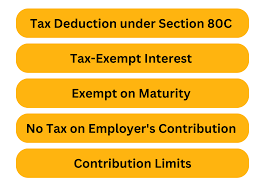
Employee Provident Fund (EPF) contribution (12% of basic salary) is:
- Eligible under Section 80C
- One of the safest long-term savings tools
- A tax-free lifetime retirement benefit
Missed aspect:
If your employer contributes more than ₹7.5 lakh annually (including EPF, NPS, superannuation), the excess becomes taxable — a detail many employees don’t know.

5. Professional Tax — Small Amount, Big Effect
Professional tax (PT) is deducted by some state governments.
It may look small (₹200/month max), but:
- PT paid is tax-deductible under Section 16
- Many employees never check PT deduction in their salary slip
- Some states don’t charge PT at all — important during job switches

6. Special Allowance — Fully Taxable but Poorly Understood
Salary slips often include a large “Special Allowance” because employers place leftover CTC here.
It is:
- 100% taxable
- Often the biggest chunk of your taxable income
- A silent reason why many salaried employees pay more tax
Understanding this helps restructure CTC for better tax efficiency.

7. Leave Travel Allowance (LTA) — Claimed by Very Few People
Employees often forget:
- LTA can be claimed twice in a 4-year block
- It only covers travel, not hotels/food
- You cannot claim without boarding passes/tickets
- It must be part of your salary structure to be claimed
LTA is one of the most underclaimed tax benefits in India.

8. Meal/ Food Allowance — Often Missed in Tax Saving
Some employers provide:
- Meal coupons (Sodexo/Swiggy/Pluxee)
- Food card allowance
- Meal reimbursements
These are tax-free up to ₹2,200 per month, but employees often:
- Fail to activate the card
- Don’t check if the exemption is applied
- Don’t use it as a tax saver
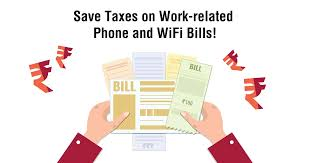
9. Telephone/Internet Reimbursement — Entirely Tax-Free
If your company offers reimbursement for:
- Mobile bills
- Internet expenses
- Data packs
these amounts are completely tax-exempt.
Many employees miss submitting monthly bills and lose the exemption.

10. NPS Employer Contribution — A Powerful but Rarely Used Benefit
Employer contribution to NPS:
- Is tax-free up to 10% of basic salary
- Falls under Section 80CCD(2)
- Does not affect your 80C limit
Employees often forget to request this benefit even though it reduces taxable income.
11. Gratuity Component — A Long-Term Tax Benefit
If your salary slip shows “Gratuity” as part of CTC:
- It is tax-free up to ₹20 lakh (lifetime limit)
- Plays a major role in long-term financial planning
Many employees ignore this hidden but valuable retirement benefit.
12. Performance Bonus / Variable Pay — Fully Taxable
Many people assume bonuses are taxed differently, but:
- They are added to taxable salary
- Can push you into a higher slab
- Affect TDS significantly
Employees must plan for this to avoid higher year-end TDS deductions.
Conclusion: Understanding Your Salary Slip = Smarter Tax Savings
Salary slips are not just monthly documents — they’re financial roadmaps.
Understanding each tax-related component helps you:
- Save more tax
- Plan your finances better
- Negotiate salary smarter
- Use employee benefits more efficiently
A few minutes of attention every month can result in thousands of rupees saved every year.
Frequently Asked Questions (FAQ)
1. What are the most common tax components in a salary slip?
The most common tax components include Basic Salary, HRA, Special Allowance, EPF contributions, Professional Tax, Standard Deduction, and TDS. These directly impact how much income tax you pay every month.
2. How does HRA help in saving tax?
House Rent Allowance (HRA) provides a partial or full tax exemption if you live in rented accommodation. The exemption depends on your basic salary, actual rent paid, and the city of residence. Many employees either forget to submit rent receipts or fail to maintain a rent agreement, leading to loss of tax benefits.
3. Is Special Allowance taxable?
Yes, Special Allowance is fully taxable. It often forms the largest part of your salary slip and directly increases your taxable income. Understanding this can help you restructure your CTC more efficiently.
4. What is the Standard Deduction for salaried employees?
All salaried employees automatically receive a ₹50,000 Standard Deduction every financial year, which reduces their taxable income. Many people forget to verify whether this deduction is applied in their salary computation.
5. Does EPF reduce taxable income?
Yes. Your EPF contribution (12% of basic salary) falls under Section 80C, reducing your taxable income. However, if your employer’s contribution to EPF, NPS, and superannuation combined exceeds ₹7.5 lakh per year, the excess becomes taxable.
6. What is Professional Tax, and is it tax-deductible?
Professional Tax (PT) is a small deduction applied in some states. It is tax-deductible under Section 16, which means it reduces your taxable income. Employees often forget to check this component on their salary slip.
7. Can I claim Leave Travel Allowance (LTA) without travel proof?
No. To claim LTA, you must submit travel tickets and boarding passes. LTA only covers travel expenses for domestic trips and can be claimed twice in a 4-year block.
8. Are Internet and Mobile Reimbursements tax-free?
Yes. If your employer provides telephone or internet reimbursement, it is 100% tax-exempt, provided you submit valid monthly bills. Many employees lose this benefit by not filing claims on time.
9. Can I ask my employer to contribute to NPS for tax benefits?
Absolutely. Employer contribution to NPS under Section 80CCD(2) is one of the most efficient tax-saving tools. It does not fall under the 80C limit and directly reduces taxable income.
10. Why do I pay more tax when I get a bonus?
Bonuses are fully taxable as salary income. Since they are added to your annual income, they may push you into a higher tax slab, leading to higher TDS for that month. Planning ahead can help manage this better.
11. Can understanding my salary slip help reduce tax?
Yes! Salary slips reveal all the components that affect your tax liability. By understanding each element—HRA, reimbursements, deductions, allowances—you can legally save more tax and structure your salary better.
12. Is it possible to restructure my CTC for better tax savings?
Yes. You can discuss options like higher reimbursements, NPS employer contribution, optimized HRA, or flexible benefits with HR to improve tax efficiency.








Post Comment