From Colaba to Crocs: A Bata Rival Rises — But Is the Lofty Valuation Justified?
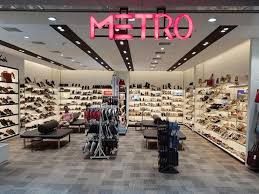
Metro Brands has grown from a single Colaba store to a premium footwear powerhouse and the face of Crocs in India. But does its soaring valuation truly reflect its fundamentals? Here’s a complete breakdown of its growth, risks, and investment logic
A New King in the Shoe Game?
India’s footwear industry has witnessed many iconic brands over the decades—Bata, Relaxo, Liberty, and newer digital-first labels. But one company has quietly rewritten the script. Metro Brands, which began as a modest shoe shop in Mumbai’s Colaba, is now one of India’s largest footwear retailers and the exclusive partner of Crocs—a brand that has become a fashion and comfort phenomenon in the country.
As Metro Brands expanded into premium retail, built a multi-brand portfolio, and captured aspirational consumers, its market valuation exploded. Reports suggest valuations scaling to levels as high as 80–90x earnings, sparking a major debate—
Is Metro Brands truly worth this valuation, or is the market pricing in perfection?
This blog dives deep into the company’s business model, growth drivers, financial concerns, competitive position against Bata and others, and whether such a lofty premium is justified.
1. Metro Brands: From Colaba to a Pan-India Footwear Empire
Metro Brands is no longer just “Metro Shoes.” It has evolved into a consumer-facing retail powerhouse, operating:
- Metro Shoes
- Mochi
- Walkway
- Crocs India retail
- Fila and other global brand partnerships
- Foot Locker (reported partnership expansion)
What makes Metro unique?
Unlike traditional footwear companies focused on manufacturing, Metro is essentially a retail-first, brand-focused distribution machine. Its model hinges on:
- Curating premium brands
- Strong retail presence in malls and high streets
- High-margin international partnerships
- An asset-light expansion strategy
Its evolution mirrors the transformation of Indian consumer behaviour—from unbranded footwear to premium labels with stronger aspirational value.
2. Why Metro Brands Became a Stock Market Darling
2.1 India’s Premium Footwear Boom
As disposable incomes rise and global fashion trends influence millennials and Gen Z, branded footwear is expanding at double-digit pace. Metro sits at the pivot point of this transition, catering to:
- Mall-going middle class
- Tier-1 and Tier-2 fashion-conscious consumers
- Comfort-first buyers—Crocs being its biggest win
2.2 The Crocs Effect
Crocs’ surge in India has been MASSIVE.
Celebrities, influencers, healthcare professionals, students, travellers—everyone embraced the brand for style and comfort. Metro, being the exclusive retail and distribution partner, enjoyed:
- Higher footfall per store
- Premium price points
- Better margins than many home-grown brands
- Fast store rollout expansion
Crocs alone is a major contributor to the Metro Brands “growth story” narrative.
2.3 Investor Narrative: Long Runway + Premiumisation
Investors love businesses with:
- High-margin products
- Scalable retail expansion
- Improving brand mix
- Long-term tailwinds (India’s rising consumption)
Metro Brands fits this perfectly, at least on paper.
This narrative pushed valuations upward, sometimes beyond fundamentals.
3. Is the Valuation Justified? Let’s Analyse
Here’s where the debate gets serious.
A valuation of 80–90x earnings is what fast-growing global tech companies get—not footwear retailers.
3.1 Growth is strong, but not hyper-growth
Metro Brands has delivered respectable revenue growth, but not the kind that typically justifies such a sky-high multiple. Revenue growth has been steady, but not explosive.
3.2 Profit softness raises questions
Several recent quarters reported:
- Lower operating profits
- Margin contraction
- Higher store-level expenses
- Slower recovery in some sub-brands
A premium valuation requires consistent profit expansion, not fluctuation.
3.3 Heavy dependence on partnerships
A big chunk of Metro’s growth stems from Crocs.
But here’s the catch:
- Partnerships can be renegotiated
- Margins may change
- Exclusivity may expire
- Competing retailers may strike similar deals
This isn’t the same as owning a brand outright.
3.4 Existing players trade far lower
Compare valuations:
| Company | Approx PE Multiple | Model |
| Metro Brands | 80–90x | Premium retail with partnerships |
| Bata India | 45–55x | Deep legacy + owned retail |
| Relaxo Footwear | 40–50x | High-volume affordable segment |
Why is Metro valued almost 2x its competitors?
Investors are paying for what the company “can become,” not what it is today.
3.5 Footwear is a discretionary category
In economic slowdowns:
- Footfalls drop
- Premium purchases decline
- Inventory holding increases
- Margins shrink
High-valuation retail stocks fall the hardest in such cycles.
4. The Risks: What Investors Must Watch Closely
4.1 Margin Pressure
Retail expansions cost money: rents, employees, inventory.
Margins can fall sharply if:
- New stores take longer to break even
- Discounts rise
- Crocs margins face renegotiations
4.2 High Inventory Risk
Footwear styles change FAST.
Any misjudgement leads to:
- Heavy markdowns
- Inventory pile-ups
- Working capital stress
4.3 Economic Sensitivity
Metro thrives when consumer sentiment is strong.
A dip in discretionary spending can drag performance significantly.
4.4 Competition with Bata, Puma, Nike & D2C brands
Each category poses a different threat:
- Bata → Broad trust + affordable range
- Puma/Nike → Premium sports segment
- D2C brands (e.g., Aqualite, Campus) → Young urban consumers
- E-commerce → Price-sensitive buyers shift online
Metro has to defend its premium retail turf aggressively.
5. Bull, Base & Bear Scenarios: What the Future May Hold
Bull Case: Valuation Justified
- Crocs continues to boom
- Foot Locker / FILA partnerships scale
- Metro launches more exclusive international tie-ups
- Profit margins stabilize and expand
- Store expansion accelerates
- India’s premiumisation trend strengthens
In this case, Metro truly becomes “India’s premium footwear king.”
Base Case: Valuation Moderately High
- Growth continues but at moderate rates
- Crocs stays strong but not explosive
- Margins remain stable but don’t improve significantly
- Valuation tapers to 55–65x
This is the most realistic scenario.
Bear Case: Valuation Overstretched
- Profit dips continue
- Crocs growth stagnates
- Competition intensifies
- Inventory issues hit margins
- Partnerships weaken or margins squeeze
Valuation contracts sharply, and share prices correct.
6. What Investors Should Track Now
To judge whether Metro Brands is worth the hype, watch these six metrics:
1. Same-Store Sales Growth (SSG)
Are existing stores selling more every quarter?
2. Gross Margin Trends
Are Crocs and premium brands maintaining margin strength?
3. Inventory Days
Rising inventory = red flag.
4. Store Payback Period
How fast does a new store turn profitable?
5. Revenue Contribution of Non-Crocs Brands
Dependence on a single brand increases risk.
6. Partnership Renewals
Crocs and FILA renewal terms will be key.
7. Final Verdict: A Great Company, But a Risky Valuation
So, is Metro Brands overvalued?
Short answer: It’s a fantastic business with a valuation that assumes perfection.
Metro Brands has:
- Strong premium retail positioning
- One of India’s best global-brand partnerships
- Attractive store formats
- High brand recall
But:
- Profit volatility
- Dependence on Crocs
- Margins under pressure
- Premium valuation
…all suggest that investors are paying too much based on what the company might achieve in the future.
If the company delivers flawless execution, the valuation holds.
If not, it corrects sharply.
For readers & investors:
- Long-term believers → Accumulate on market corrections.
- Conservative investors → Watch key metrics before entering.
- Traders → Expect volatility due to high valuation sensitivity.
Metro Brands is undoubtedly one of India’s most exciting retail success stories. But as history shows, great companies are not always great stocks at every price.
8. FAQs
Q1. Why is Metro Brands valued higher than Bata?
Because investors expect faster growth, premiumisation benefits, and stronger brand partnerships—especially with Crocs.
Q2. Is Metro Brands dependent on Crocs?
Yes. Crocs contributes a large share of store traffic and premium margins. Partnership changes could impact earnings.
Q3. What can justify Metro’s high valuation going forward?
Sustained revenue growth, better store economics, higher margins, and diversification beyond Crocs.
Q4. Is Metro Brands a better long-term bet than Relaxo or Bata?
It depends on your risk appetite—Metro offers higher growth potential but significantly higher valuation risk.









Post Comment