Swing Trading vs. Long-Term Investing – Which Works Better for You?
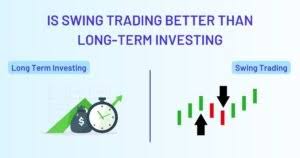
Understand the key differences between swing trading and long-term investing. Learn which strategy suits your goals, risk appetite, and market experience.
In the world of stock markets, two major strategies dominate investor behavior — Swing Trading and Long-Term Investing. Both promise profits, but they work on completely different timeframes, risk levels, and mindsets.
While swing traders thrive on short-term price movements, long-term investors focus on the big picture — holding quality assets for years to enjoy compounded returns.
But which one is better for you? Should you chase quick market swings or let time do the compounding magic?
Let’s dive deep into the comparison of Swing Trading vs. Long-Term Investing, exploring their meaning, strategies, advantages, disadvantages, and suitability for different types of investors.
1. What Is Swing Trading?
Swing Trading is a short-term trading strategy where investors buy and hold stocks for a few days or weeks to profit from price fluctuations.
The goal is to “swing” along with the market momentum — buy low and sell high (or vice versa) within a short period.
Example:
If a stock trades at ₹1,000 and shows bullish momentum, a swing trader may buy it and sell at ₹1,080 within 5–10 days, earning an 8% gain.
Swing traders use technical analysis, charts, and indicators like:
- Moving Averages (MA)
- Relative Strength Index (RSI)
- MACD (Moving Average Convergence Divergence)
- Support and Resistance levels
Swing trading doesn’t require intraday focus but demands daily market monitoring to track price trends and news.

2. What Is Long-Term Investing?
Long-term investing involves buying fundamentally strong assets — like stocks, mutual funds, or ETFs — and holding them for years or even decades to benefit from compounding returns and business growth.
Long-term investors care less about daily price fluctuations and more about:
- Company fundamentals
- Earnings growth
- Economic trends
- Dividends and wealth creation
Example:
An investor who bought Infosys shares in 2003 for ₹100 and held them for 20 years has seen that investment multiply more than 50x, excluding dividends.
Long-term investing is driven by patience, discipline, and conviction.
3. Key Differences Between Swing Trading and Long-Term Investing
| Aspect | Swing Trading | Long-Term Investing |
| Time Horizon | Days to weeks | Years to decades |
| Goal | Short-term profit | Wealth creation |
| Analysis Type | Technical | Fundamental |
| Risk Level | High | Moderate to Low |
| Market Monitoring | Daily | Periodic |
| Returns | Quick, volatile | Gradual, compounded |
| Tax Impact | Higher (short-term gains) | Lower (long-term capital gains) |
| Mindset | Active, reactive | Patient, strategic |
Both strategies can yield profits — the difference lies in risk tolerance, time commitment, and financial goals.
4. Pros and Cons of Swing Trading
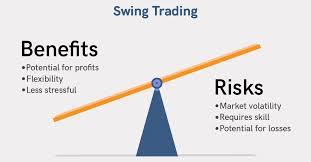
Advantages of Swing Trading
- Quick Profits:
You can make money in short bursts without waiting years for results. - Flexible Timeframe:
Ideal for those who can’t monitor markets minute-by-minute but can review charts daily. - Opportunities in Any Market:
You can profit from both bullish and bearish trends. - Active Learning Curve:
Frequent trades help you understand market psychology faster.
Disadvantages of Swing Trading
- High Risk:
Short-term volatility can lead to rapid losses. - Stress and Time Intensive:
Requires constant analysis, updates, and stop-loss monitoring. - Emotional Pressure:
Greed and fear can cause impulsive decisions. - Tax Impact:
Gains are treated as short-term capital gains (STCG) — taxed at 15%.
Swing trading suits those who are technically skilled, disciplined, and emotionally strong under pressure.
5. Pros and Cons of Long-Term Investing
Advantages of Long-Term Investing
- Power of Compounding:
Returns generate more returns, creating exponential growth over time. - Reduced Stress:
No need to monitor daily price fluctuations. - Lower Transaction Costs:
Fewer trades mean fewer brokerage and tax implications. - Tax Efficiency:
Long-term capital gains (LTCG) on equity are taxed at only 10% beyond ₹1 lakh profit. - Dividends and Corporate Growth:
Long-term investors benefit from bonus issues, dividends, and stock splits.
Disadvantages of Long-Term Investing
- Patience Required:
Returns take years; impulsive investors may get restless. - Market Crashes:
Long-term investors must tolerate temporary downturns. - Inflation Risk:
If invested in low-return assets, inflation can erode value.
Long-term investing is best for those with steady income, moderate risk appetite, and long-term financial goals like retirement or children’s education.
6. Which Strategy Builds More Wealth?
The answer depends on your goals and personality.
Swing Trading:
- Can generate quick profits but also quick losses.
- If done with skill, you can earn 10–15% per month—but consistency is rare.
- Requires strict risk management and stop-loss discipline.
Long-Term Investing:
- Historically proven to build sustainable wealth.
- Compounding can turn small sums into fortunes over decades.
Example:
If you invest ₹10,000 per month in equity mutual funds earning 12% annualized returns:
- In 10 years → ₹23 lakh
- In 20 years → ₹99 lakh
- In 30 years → ₹3 crore+
Clearly, long-term investing leverages time and compounding better than trading frequency.
7. Which One Suits You Better?
Here’s how to decide based on personality and lifestyle:
| Profile | Best Strategy | Reason |
| Full-time employee | Long-term investing | Less time to monitor markets |
| Freelance/pro trader | Swing trading | Can analyze and execute trades actively |
| Risk-tolerant person | Swing trading | Comfortable with volatility |
| Conservative investor | Long-term investing | Prefers stability and steady growth |
| Financially independent individual | Hybrid (both) | Can balance short-term gains and long-term wealth |
For most people, a hybrid approach works best — invest 80% of your money long-term and trade 20% for learning or quick profits.
8. Combining Both: The Balanced Approach
You don’t have to choose strictly between swing trading and investing. A balanced approach gives flexibility:
Example Strategy:
- 80% Portfolio: Invested in mutual funds, blue-chip stocks, or ETFs for long-term growth.
- 20% Portfolio: Used for swing trades based on short-term market momentum.
This helps you:
- Enjoy steady wealth creation through compounding.
- Stay engaged with the market for active learning.
- Reduce emotional impact if trades go wrong.
9. Tax Implications in India
Understanding taxation is crucial before choosing your path:
| Type of Income | Holding Period | Tax Rate |
| Swing Trading (Equity STCG) | Less than 12 months | 15% |
| Long-Term Investing (Equity LTCG) | More than 12 months | 10% beyond ₹1 lakh profit |
| Speculative Income (Intraday) | Same day | Added to income tax slab |
Swing trading attracts more frequent taxes, while long-term investing is more tax-efficient.
10. Real-Life Example: Ramesh vs. Priya
- Ramesh is a swing trader. He makes 10% profit in one month but loses 12% the next. Over the year, his average return is around 8%, excluding taxes and brokerage.
- Priya invests in blue-chip stocks via SIPs and holds for 10 years, earning 12–14% compounded annually.
Over time, Priya’s ₹5 lakh grows to ₹15 lakh, while Ramesh’s fluctuates between profit and loss.
Lesson: Consistency beats excitement.
11. Tools for Each Strategy
Swing Trading Tools
- Charting: TradingView, Zerodha Kite
- Screeners: Tickertape, Screener.in
- Indicators: RSI, MACD, Bollinger Bands
Long-Term Investing Tools
- Fund Research: Groww, Kuvera, Value Research Online
- Portfolio Tracking: INDmoney, Moneycontrol
- Analysis: Annual reports, company fundamentals
12. Final Verdict – Swing Trading vs. Long-Term Investing
| Criteria | Winner |
| Time Commitment | Long-Term Investing |
| Risk Management | Long-Term Investing |
| Quick Returns | Swing Trading |
| Stress Level | Long-Term Investing |
| Consistency | Long-Term Investing |
| Learning Curve | Swing Trading |
Verdict:
If you’re new to markets or prefer peace of mind, long-term investing is your best bet.
If you enjoy analyzing charts, spotting trends, and handling volatility, swing trading can be rewarding — but proceed cautiously.
In the end, your success depends less on “which strategy you pick” and more on how disciplined you stay with it.
Conclusion
Both Swing Trading and Long-Term Investing can make you wealthy—but they serve different purposes.
- Swing trading is about skill, speed, and strategy.
- Long-term investing is about patience, consistency, and compounding.
The ideal approach?
Master long-term investing to secure your future and use swing trading as a learning tool or secondary income stream.
Remember:
“Time in the market beats timing the market — every single time.”
For More Such Amazing Content Please Visit : https://investrupeya.insightsphere.in/










Post Comment